Catalogues
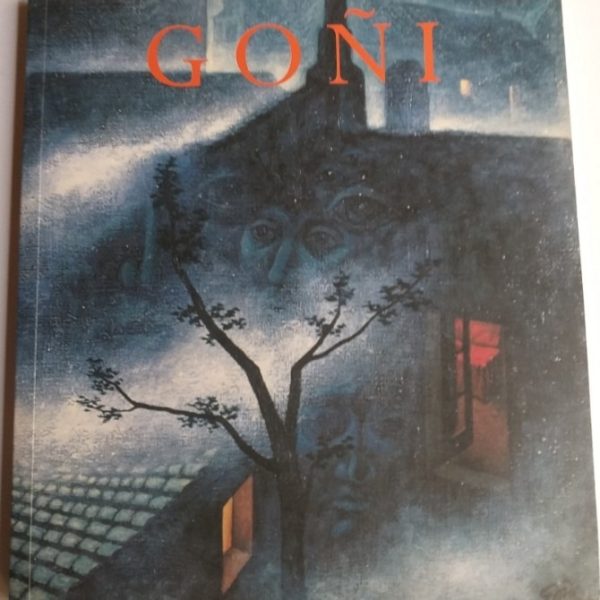
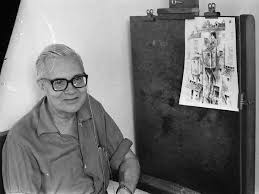
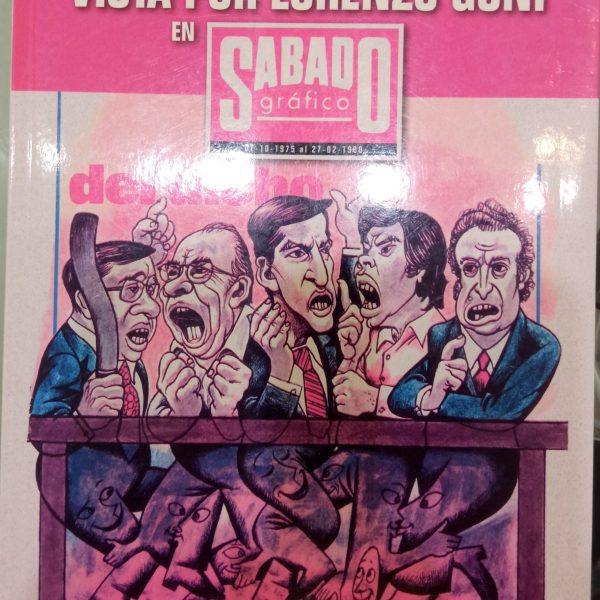
Lorenzo Goñi, one of the most important Spanish draughtsmen of recent times, was born in Jaén in 1911. His family soon moved to Barcelona, where he received his early schooling. After a bout of measles, the first symptoms of his incurable deafness began to appear. “By fourteen or fifteen I was noticeably deaf and people had to speak loudly to me.” Outside his close family circle his isolation was complete, and shyness made social life difficult.
His father enrolled him in painting academies, where he drew still lifes and life models. In drawing the latter he acquired the astonishing ease and assurance that would later become one of the hallmarks of his prints and drawings. On his walks in the mountains he lived through a cathartic episode which, trivial as it was —the trivial is what matters most—, filled him with lifelong remorse: he killed a cat with a stone. In the future the artist would fill his compositions with cats —another of his hallmarks— as a kind of “dark tribute to my victim”.
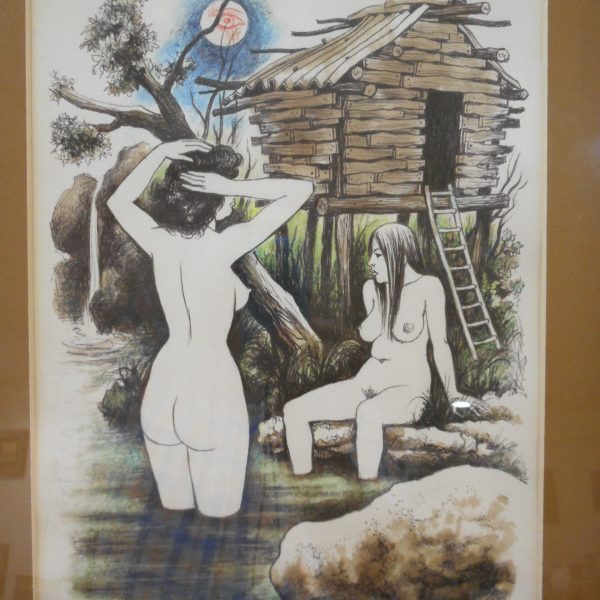
Spanish and universal, his language is understood all over the world. He is an improbable dreamer, the creator of non-existent worlds that nonetheless ooze reality. His women —there is no eroticism like his—, his cats, his witches’ sabbaths, his impossible dwellings and a constant, weary humanity glimpsed in perpetual solitude —his characters do not speak, and perhaps do not listen either— capture the sensibility of those who look at them for good. Anyone who once looks into his work is caught forever.