Silences of colour, Paco Conesa
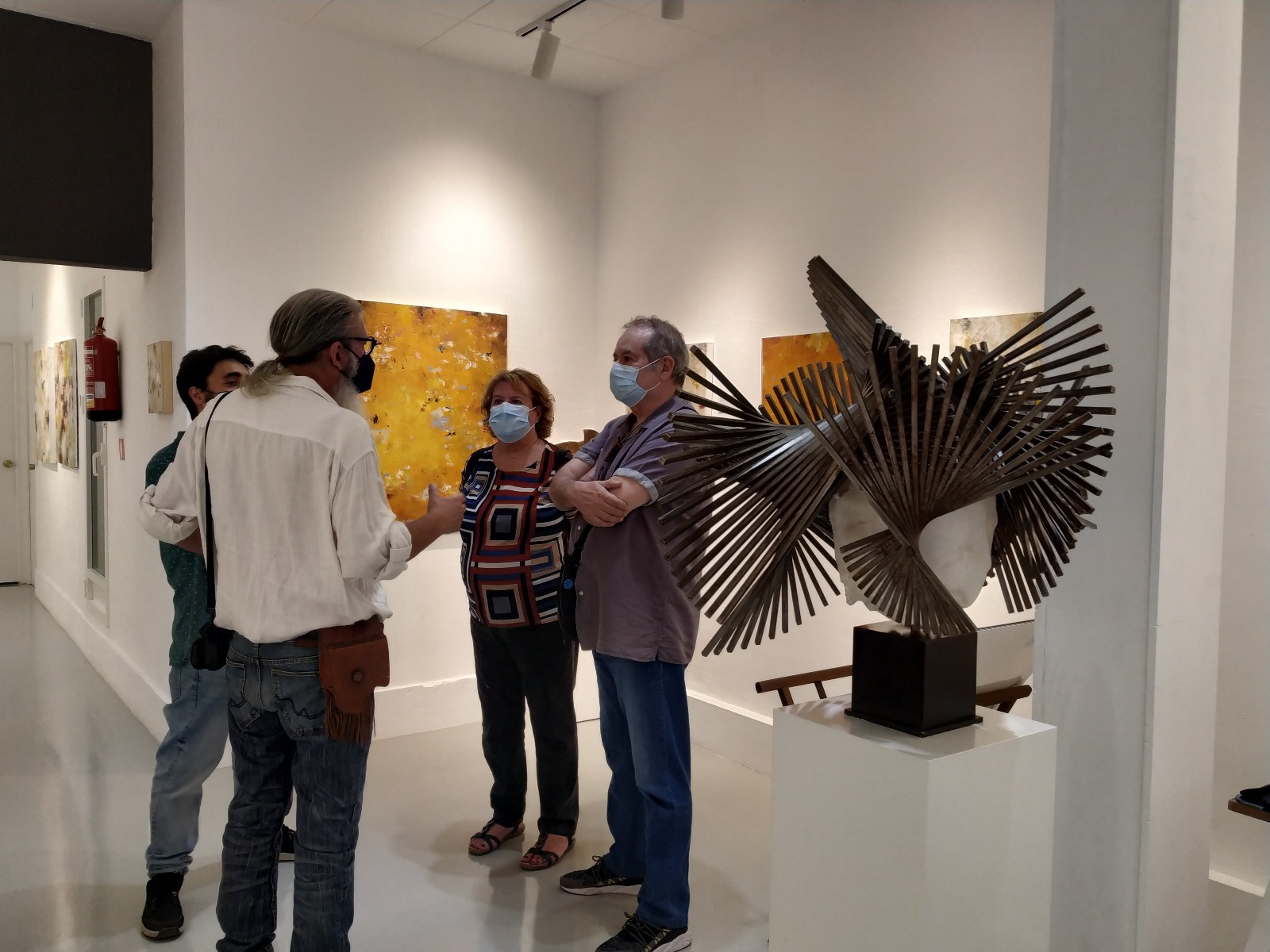
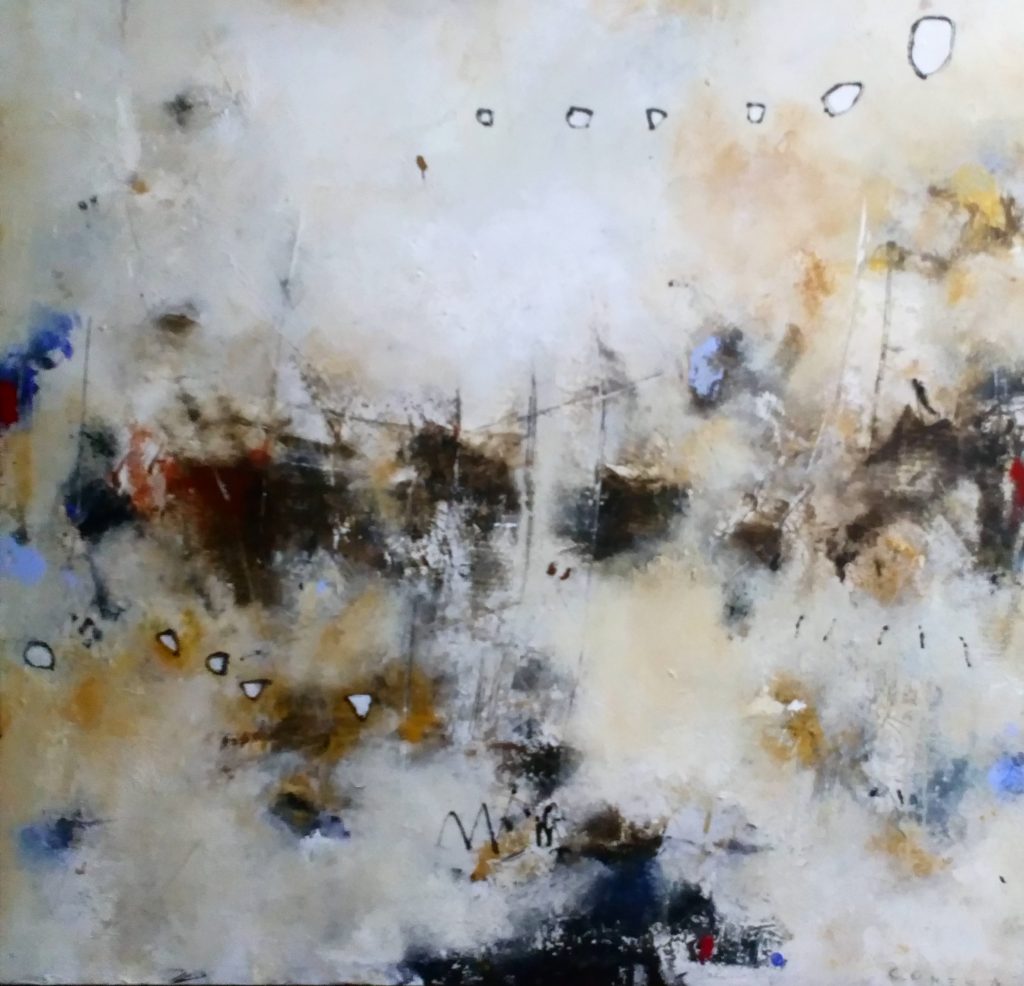
When you look at the abstract painting of Francisco Jiménez Conesa, Paco Conesa (Madrid, 1956), you sense in it the idea of freedom in painting: freedom of composition, freedom of form, freedom of colour… Abstraction in art is freedom par excellence.
The viewer is amazed by Conesa’s freedom and may suspect licence, that is, a lack of discipline or of a search for clear and deep paths on the painter’s part. His paintings are varied and do not seem to follow specific, defined series. Some are more successful or felicitous than others. The titles —sometimes lyrical, sometimes descriptive— do not always help, because they bring with them a sometimes risky dynamic of interpretation.
We critics, with our own prejudices, would perhaps prefer series numbered with Roman numerals to show us the author’s directions, but I fear that with Paco Conesa this would be difficult, if not impossible. He is very free, like his painting.
“I work on impulse, and every morning, when I stand in front of the canvas, I reflect my thoughts, my humour or my state of mind. I am very changeable,” explains the painter, who confesses that he does not like giving titles to his abstract paintings, because “if I call one ‘Rain’, some people start looking for an umbrella”. But someone has to give them titles.
Paintings certainly need names so that we can talk about them in spoken or written discourse, while perhaps avoiding excessive dispersion. “I work with jazz playing in the background, and jazz always leads to freedom of interpretation,” adds Paco Conesa. Music is certainly a very powerful art and sometimes stifles the unsettling, creative silence. Each to his own method.
If I were to single out works in Conesa’s exhibition, this critic would choose paintings such as “Azul” (Blue), a kind of beautiful nocturne; “Secuencia” (Sequence) one and two, in greys and ochres —here there is a series, or a sequence—; or geometric paintings such as “Colores” (Colours) and “Franjas” (Stripes).
Julia Sáez-Angulo