Zóbel and his circle
Those who think that Fernando Zóbel was a great painter, Eastern in spirit yet Western in training, with a very defined and particular style, unique and especially beautiful, are quite right.
Although I never met him personally, my love of abstract art comes from a NO-DO newsreel devoted to our brilliant artist, in which you could see how he worked. Starting from a figurative landscape, he composed a second, a third, a fourth painting…, in which he progressively broke down its elements, choosing part of its structure and its colour, until in the end he produced a completely abstract work that kept the essence of the original landscape. In other words, external reality only interested him as a pretext or, figuratively speaking, as a pre-text.
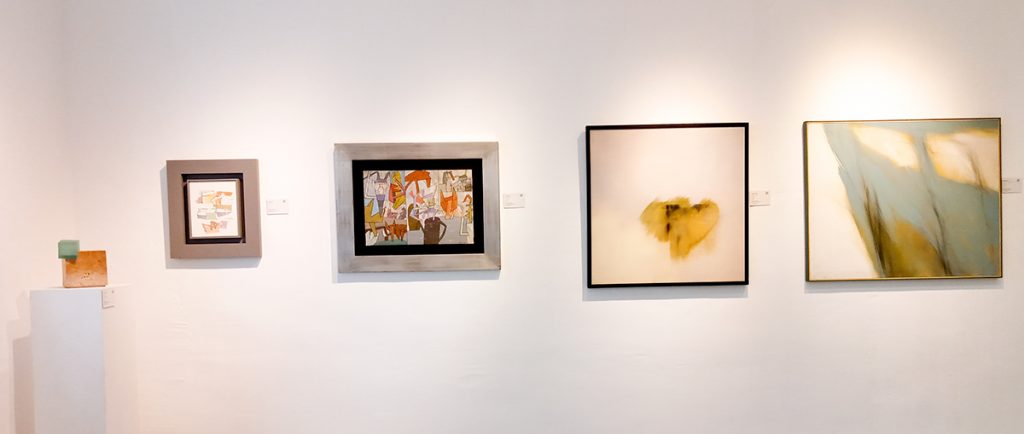
Saura used to say that, if you look carefully, you can often spot what he called “spelling mistakes” in paintings, for the art of painting has something of writing about it. I must confess that for more than three decades I have been especially fascinated by the handwriting of good painters (Saura, Chillida, Tàpies, Bonifacio, Pagola…), because I perceive those subtle bridges between drawing, the painterly stroke and the letter. Perhaps this has to do with Manolo Valdés’s remark that every time he looks at a painting he tries to carry off his booty. Indeed, painting has something of literature, philosophy, geography, music and history about it, as well as technique; and precisely what we do not see —the hidden, the recondite, the sublime, the essential— that is Art.
In this sense Zóbel was the foremost exponent of what we might call “poetic abstraction”, a field in which lyricism, the fruit of an eminently intellectual way of working, is at the same time highly technical and, in a way, transcendent.
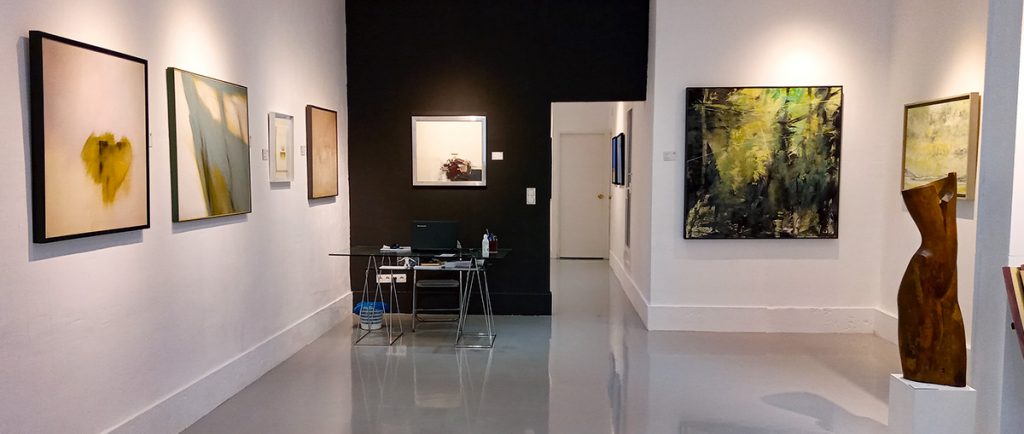
No artist of his generation climbed so far and so high in search of the sublime. That inner struggle gave rise to an extraordinarily personal, unmistakable language; perhaps that is the reason for the esteem he enjoys all over the world, from East to West.
Pictorially speaking, Zóbel was a mystic, a mystic who followed his path along the ascetic way of aesthetics. His creative process is pure combat, a tremendous effort to shed the accessory, the dispensable, the bothersome…, precisely in that inner struggle to capture the immaterial essence of things. Unlike traditional art, whose main point of reference was visible reality, Zóbel sought to paint the hidden essence of things, of the landscape, of people. It is no wonder, then, that he was so respected and loved by all the painters of his generation —a very rare phenomenon— or that he achieved undisputed and unanimous international recognition. One could say that every self-respecting museum of modern art has a work of his, and that one without a Zóbel seems unfinished, provisional.
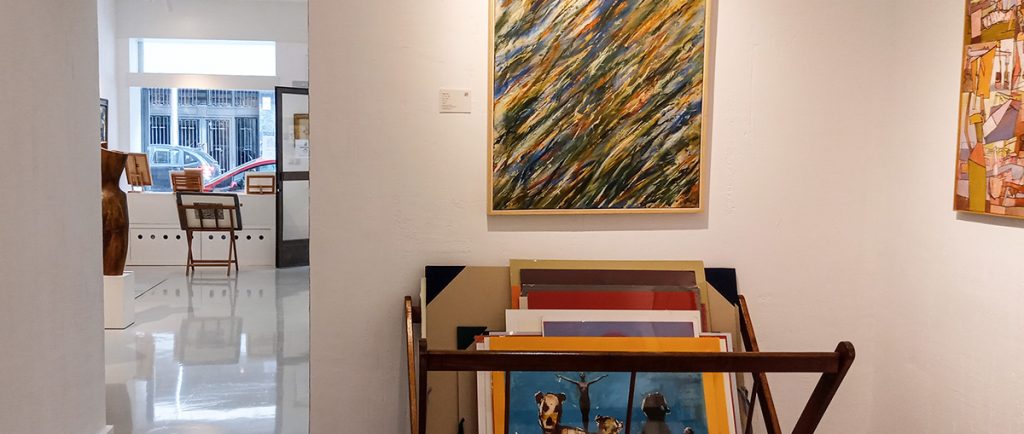
Even so, this only bears witness to a small part of his personality. Don Fernando was undoubtedly the last —perhaps the only, or at least the finest— exponent of a typically Renaissance figure living in the 20th century. Collector, patron, publisher, teacher…, he also cultivated other arts, such as poetry, aesthetic thought and music, and was a tireless traveller. His time in this world was a constant journey in which he showed interest in everything lovely and beautiful: from an abandoned architectural structure lost in a landscape to the grace of children playing football or riding bicycles; from Eastern scripts to the most popular traditions of immortal Castile. He saw beauty in the ever-surprising Holy Week processions, in the steep, stony and muddy slopes of the old town, where the donkey laden with firewood —or with pitchers of water— went up and down about its work, or in the magic of the transverse flute.
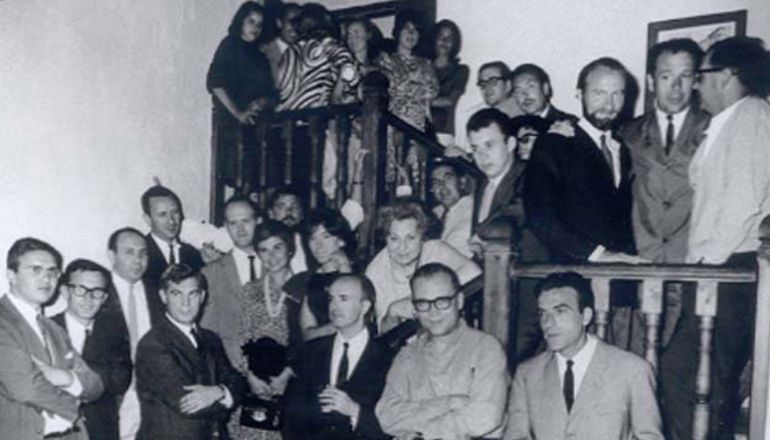
As well as founding the Museum of Abstract Art in Cuenca, the first museum in Spain with an absolutely universal outlook (he subscribed it to every art magazine in the world), he put Cuenca on the international map for ever. From its opening in particular, the city became a magnet for any artist who wished to be taken seriously. No one who wanted to be a painter in Spain could do without a stay in Cuenca to “drink” from its Museum; that also meant getting to know Zóbel himself, spending time with him and immersing oneself in the extraordinarily cultured atmosphere that could then be breathed in that Castilian acropolis, an atmosphere comparable only to that of Paris.
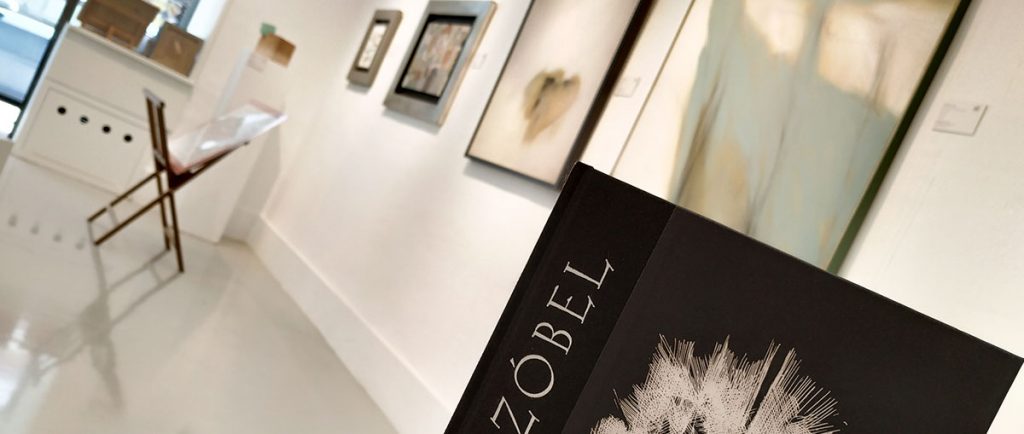
His way with people, his universal stature and his warmth meant that pictorial and artistic vocations grew and were born around him, and he always helped them in every way he could. His generosity was such that he would give a young craftsman the machinery needed to set up a paper mill for painters and printmakers in Cuenca, or give the best photographic equipment then available to someone who wanted to make a living from photography, placing it at the service of painters who, when exhibiting in the emerging galleries, wished to reproduce their best works in the modest catalogues of the time.
That patronage also led him, in his desire to spread the beauty of modern art, to buy a magnificent printing press on which many artists began their adventure in printmaking, and around the museum screenprinting, woodcut, engraving and lithography workshops began to be founded. The museum constantly published and sold its own prints to make the different expressive languages of the new aesthetics accessible to all audiences.
Under the shelter of his personality and activity, artists of the stature of Antonio Lorenzo, Adrián Moya, Bonifacio, Moset, Ángel Cruz and Simeón Saiz Ruiz grew —or came to fruition— but, as I said before, other great figures inevitably passed through Cuenca too: some better known, such as Guerrero, Millares, Mompó, Luis Muro and Sempere, and younger ones such as Eva Lootz, Monir and Mitsuo Miura. To this long list we must add two new groups of illustrious names: on the one hand, the artists who were already there, such as Saura or Torner, and on the other a generation of young people who drank from the best sources in Europe and were in some way “embarked” —or “enchanted”— by the magic of the extraordinary cultural atmosphere Zóbel created.
Some were from Cuenca, such as Luis Buendía, Óscar Lagunas, José María Lillo, Moset, Adrián Moya, Simeón and Zapata; others had become adopted sons of Cuenca, such as the aforementioned Bonifacio, the sculptor Javier Florén, or Pagola. Without being strictly his disciples, all of them were born, grew and matured nourished by the figure and aesthetics of Zóbel and by the best of Spanish abstract art, as well as by the avant-gardes we now call classical, where conceptual art and visual poetry, expressionism and constructivism competed.
All the painters mentioned had something to say; all of them had the opportunity to watch Zóbel work, sometimes in his studio, sometimes sketching from life; all of them learned a great deal from him about colour, aesthetic thought, the avant-gardes and the need to find their own language…; all of them grew up in the wise and protective shade of the great patron, the great agitator, the profound giant.
That is precisely what Zóbel was: a giant, an extraordinary, incomparable man, for to his personal greatness must be added his American experience, his cosmopolitanism, his deep Eastern roots and his vast culture. It is easy to understand that he was irreplaceable, and, irreplaceable as he was, the world has not found anyone like him who has left such a remarkable mark.
His ashes rest in an artists’ cemetery overlooking the gorge of the Júcar, where the city ceases to be a city; there, with the mountain air, the rain and the passing of the seasons, the need for constant remembrance grows ever more vital.
Saura used to say that history swept everything away with a kind of broom, everything except great people, those who managed to make ART with capital letters. In that roll of survivors there will undoubtedly remain our ever-admired Don Fernando, whose smile, whose calm and serene bearing, whose personal aesthetic and whose legacy are and will always be utterly unfading.
Santiago Catalá